AI ClaimsRapid review

Niall Ferguson · 2008

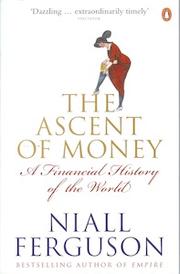
The Ascent of Money

A Financial History of the World

Cover via Open Library

Rough AI truth score

75/100

Ferguson's central corrective—that finance is a constitutive part of political and economic history—is strong. His innovation-driven world tour is illuminating, but it is selective and sometimes slides from finance enabling development to a smoother evolutionary ascent than crises, coercion, and institutional variation justify.

Based on three central claims · medium confidence

The three claims

01Supported

Financial institutions and innovations have been central to the development of states, trade, industry, and war.

Historical scholarship documents how public debt, banking, insurance, securities, and credit mobilized resources across time and space. Finance was not sufficient by itself: administrative capacity, law, taxation, technology, coercion, and political bargains determined which financial tools worked and for whom.

02Mostly supported

Better-developed financial systems can promote long-run economic growth by allocating capital and managing risk.

Cross-country, industry, and firm evidence supports a causal contribution from financial development to investment, innovation, and growth. Excess leverage, exclusion, capture, and poorly regulated innovation can instead magnify crises, so more finance is not monotonically better finance.

03Mixed

Financial history follows an evolutionary ascent in which successful innovations are selected and spread toward greater sophistication.

Competition and imitation do diffuse useful contracts and institutions, making evolutionary language a productive analogy. Financial forms also spread through empire, law, crisis, state privilege, and path dependence; survival can reflect political protection rather than efficiency, and sophistication can increase fragility.

Other claims worth checking
  • Public debt transformed state capacity.
  • Housing and insurance connect household life to global finance.

What this number means. It is an AI-generated first-pass judgment of three central factual or causal claims—not a rating, exhaustive fact-check, or human peer review. Claim credits are 100% for supported, 75% for mostly supported, 50% for mixed, and 25% for weak, then averaged and rounded. Lower confidence means the score should move more as better evidence arrives.

Method three-central-claims/0.1.0 · checked 2026-09-01 · 3/3 selected claims assessed · method and source audit