AI ClaimsRapid review

Molly Caldwell Crosby · 2006

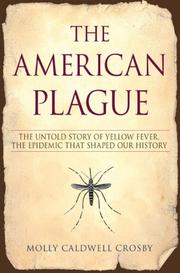
The American Plague

The Untold Story of Yellow Fever, the Epidemic That Shaped Our History

Cover via Open Library

Rough AI truth score

92/100

The disease burden, mosquito breakthrough, and 1905 control campaign are strongly documented. The familiar Walter Reed hero story needs the book's own qualification: Carlos Finlay supplied the key hypothesis.

Based on three central claims · high confidence

The three claims

01Supported

Yellow fever repeatedly devastated U.S. port cities and the Mississippi Valley, shaping migration, commerce, public authority, and urban life.

Historical surveillance attributes at least 100,000 U.S. deaths to yellow fever from 1693 to 1905, including major epidemics in Philadelphia, New Orleans, and the Mississippi Valley. Quarantines, flight, trade disruption, and political conflict followed.

02Mostly supported

Walter Reed's commission proved that Aedes aegypti transmitted yellow fever and thereby solved the disease's central mystery.

The commission's controlled experiments decisively established mosquito transmission, but Cuban physician Carlos Finlay had proposed the mechanism and supplied mosquitoes and practical insight years earlier. The breakthrough was cumulative, not Reed's alone.

03Supported

Mosquito control ended the 1905 New Orleans epidemic and marked the end of major locally acquired yellow-fever outbreaks in the United States.

Federal and local teams screened patients, inspected homes, oiled or covered water containers, fumigated buildings, and destroyed breeding sites. The campaign contained the outbreak, and New Orleans and nearby Pearlington recorded the last major local U.S. cases.

Other claims worth checking
  • Commercial resistance and stigma delayed official recognition of outbreaks.
  • Yellow-fever control helped make sustained Panama Canal construction possible.

What this number means. It is an AI-generated first-pass judgment of three central factual or causal claims—not a rating, exhaustive fact-check, or human peer review. Claim credits are 100% for supported, 75% for mostly supported, 50% for mixed, and 25% for weak, then averaged and rounded. Lower confidence means the score should move more as better evidence arrives.

Method three-central-claims/0.1.0 · checked 2026-09-01 · 3/3 selected claims assessed · method and source audit