AI ClaimsRapid review

Daniel Gilbert · 2006

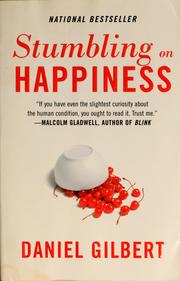
Stumbling on Happiness

Cover via Open Library

Rough AI truth score

67/100

The book's core claim survives: people often overestimate the intensity or duration of future feelings, partly because they focus on the focal event and neglect adaptation and surrounding life. But affective forecasts are not simply useless. Relative accuracy can be good, direction and magnitude depend on measurement, and experience, concrete information, and comparison cases can improve predictions.

Based on three central claims · medium-high confidence

The three claims

01Mostly supported

People often overestimate the intensity or duration of their emotional reactions to future events.

A large affective-forecasting literature finds impact bias across anticipated wins, losses, relationships, health events, and other outcomes. Meta-analysis shows that conclusions depend on whether accuracy means absolute level, rank ordering, duration, peak affect, or the interpretation of forecast and experience questions.

02Mostly supported

Focalism, adaptation, immune neglect, and misconstrual contribute to affective forecasting errors.

Experiments support several mechanisms: forecasters overweight the focal event, neglect other future activities, underestimate sense-making and coping, and imagine the wrong future details. Their contribution varies by event, horizon, experience, and measurement, so no single mechanism explains every error.

03Mixed

These biases make people broadly unable to identify what will improve their happiness.

Forecast errors can distort choices, especially for unfamiliar or emotionally vivid outcomes. Yet people often predict valence and relative differences correctly, learn from representative experience, consult others, and make decisions using values beyond momentary affect. The evidence does not establish global incompetence about well-being.

Other claims worth checking
  • Other people's experiences can sometimes forecast one's own reaction better than imagination.
  • Remembered, anticipated, and experienced happiness answer different questions.

What this number means. It is an AI-generated first-pass judgment of three central factual or causal claims—not a rating, exhaustive fact-check, or human peer review. Claim credits are 100% for supported, 75% for mostly supported, 50% for mixed, and 25% for weak, then averaged and rounded. Lower confidence means the score should move more as better evidence arrives.

Method three-central-claims/0.1.0 · checked 2026-09-01 · 3/3 selected claims assessed · method and source audit