AI ClaimsRapid review

Lincoln Paine · 2013

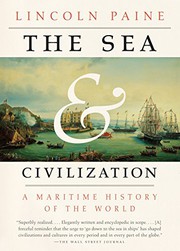
Sea and Civilization

A Maritime History of the World

Cover via Open Library

Rough AI truth score

75/100

Paine makes a strong corrective case that seafaring, ports, and ocean exchange were foundational long before European expansion. A maritime lens reveals neglected connections but does not replace land-based agriculture, states, and inland networks as coequal historical forces.

Based on three central claims · medium confidence

The three claims

01Supported

Maritime routes connected distant societies and moved goods, crops, technologies, and ideas long before modern European empires.

Indian Ocean archaeology, UNESCO route histories, and Austronesian dispersal research document durable premodern sea connections across Asia, Africa, and the Pacific. The scale and continuity varied, but the chronology decisively predates European oceanic dominance.

02Mostly supported

Austronesian seafaring enabled one of history's largest language dispersals across Island Southeast Asia, the Pacific, and Madagascar.

Linguistic and archaeological reviews strongly support expansion from Taiwan through maritime technologies, settlement, and exchange. Exact routes, population mixtures, pauses, and the relative roles of farming and foraging remain active research questions.

03Mixed

The sea is the primary driver of civilization, and conventional land-centered histories systematically miss the main causal story.

Maritime access strongly shaped mobility, trade, war, and urban growth, so the corrective has real value. Most societies also depended on inland food systems, rivers, roads, institutions, demography, and ecology; causal primacy changes by place and period.

Other claims worth checking
  • Ports are interfaces between ecological and political systems.
  • Navigation knowledge is a form of infrastructure.

What this number means. It is an AI-generated first-pass judgment of three central factual or causal claims—not a rating, exhaustive fact-check, or human peer review. Claim credits are 100% for supported, 75% for mostly supported, 50% for mixed, and 25% for weak, then averaged and rounded. Lower confidence means the score should move more as better evidence arrives.

Method three-central-claims/0.1.0 · checked 2026-09-01 · 3/3 selected claims assessed · method and source audit