AI ClaimsRapid review

Michael Moss · 2013

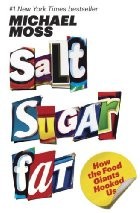
Salt Sugar Fat

How the Food Giants Hooked Us

Cover via Open Library

Rough AI truth score

75/100

Moss convincingly documents formulation, marketing, and the commercial importance of salt, sugar, fat, and convenience. Controlled evidence supports overeating on ultra-processed diets, but hook and addiction language remains an active scientific construct rather than a settled diagnosis for ordinary consumption.

Based on three central claims · medium confidence

The three claims

01Supported

Large food companies deliberately optimize formulations, packaging, pricing, and marketing to increase product appeal and sales.

FTC compulsory-process reports document integrated campaigns, research, packaging, digital promotion, and large expenditures, while product formulation is a normal and well-documented industrial practice. Intent to maximize sales is clear even when individual internal anecdotes cannot be independently generalized.

02Mostly supported

Ultra-processed products rich in refined carbohydrates and fat can drive higher intake and weight gain.

The NIH inpatient crossover trial found about 500 additional calories per day and short-term weight gain on an ultra-processed diet despite matching several presented nutrients. The trial was small and does not identify salt, sugar, or fat as a single universal cause.

03Mixed

Industrial foods hook consumers through an addiction process closely comparable to dependence on drugs.

Reviews find compulsive eating, impaired control, and reward-system parallels concentrated in some ultra-processed foods and people. Food addiction remains contested, measurements are often cross-sectional and self-reported, and eating is biologically necessary, limiting a simple drug-equivalence claim.

Other claims worth checking
  • Competitive pressure can punish unilateral product reformulation.
  • Convenience and low price help explain demand alongside manipulation.

What this number means. It is an AI-generated first-pass judgment of three central factual or causal claims—not a rating, exhaustive fact-check, or human peer review. Claim credits are 100% for supported, 75% for mostly supported, 50% for mixed, and 25% for weak, then averaged and rounded. Lower confidence means the score should move more as better evidence arrives.

Method three-central-claims/0.1.0 · checked 2026-09-01 · 3/3 selected claims assessed · method and source audit