AI ClaimsRapid review

Mark Kurlansky · 2002

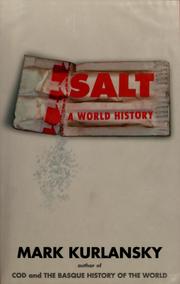
Salt

A World History

Cover via Open Library

Rough AI truth score

75/100

Kurlansky accurately shows salt's long importance for preservation, diet, taxation, and industry. Salt is a powerful connective thread rather than a master key: state formation, trade, and war rarely turn on one commodity alone, and modern health policy adds a paradox of sodium reduction and iodization.

Based on three central claims · medium confidence

The three claims

01Supported

Before refrigeration, salt was a foundational preservative that enabled storage and long-distance movement of meat, fish, and other foods.

USGS histories describe universal culinary and preservation use and explain how salt inhibits bacterial growth and spoilage. Drying, smoking, fermentation, sugar, cold, and canning also mattered, but salt's broad practical role is indisputable.

02Mostly supported

Control and taxation of salt repeatedly generated state revenue, trade routes, monopolies, and political conflict.

Salt's biological necessity, uneven deposits, low substitutability, and preservation value made it unusually taxable and strategic in many societies. Institutional patterns varied, and demonstrating that salt caused particular wars or revolutions requires case-specific evidence beyond commodity importance.

03Mixed

Salt provides a near-universal master explanation for the rise and fall of civilizations across world history.

Following salt reveals preservation, mining, taxation, trade, chemistry, and public health across regions. Its causal rank changes sharply by time and place, while grain, energy, institutions, disease, warfare, and geography often dominate broader outcomes.

Other claims worth checking
  • Industrial chemistry transformed salt demand after the nineteenth century.
  • Iodized salt turned an old commodity into a public-health delivery system.

What this number means. It is an AI-generated first-pass judgment of three central factual or causal claims—not a rating, exhaustive fact-check, or human peer review. Claim credits are 100% for supported, 75% for mostly supported, 50% for mixed, and 25% for weak, then averaged and rounded. Lower confidence means the score should move more as better evidence arrives.

Method three-central-claims/0.1.0 · checked 2026-09-01 · 3/3 selected claims assessed · method and source audit