AI ClaimsRapid review

V. S. Ramachandran and Sandra Blakeslee · 1998

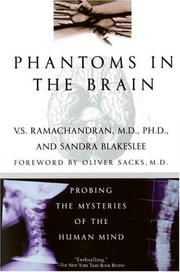
Phantoms in the Brain

Probing the Mysteries of the Human Mind

Cover via Open Library

Rough AI truth score

75/100

The neurological phenomena are real and the book's ingenious bedside experiments remain scientifically valuable. Its strongest single-mechanism stories have aged less well: phantom pain reflects interacting peripheral, cortical, motor, and contextual processes, and mirror therapy has heterogeneous clinical evidence.

Based on three central claims · medium-high confidence

The three claims

01Mostly supported

Phantom limbs reveal that body representation is actively maintained and can reorganize after amputation.

Phantom sensations and post-amputation cortical change are well documented, including preserved and remapped representations. Current reviews reject a one-way remapping story: peripheral input, motor representations, prosthesis use, pain processing, ownership, and context all interact.

02Supported

Simple perceptual manipulations can change a person's experience of an absent or impaired body part.

Case observations and controlled rehabilitation studies support the broader principle that visual and multisensory feedback can alter body perception and motor control. That result is narrower than claiming a universal cure for phantom pain, but it validates the book's central experimental insight.

03Mixed

Mirror therapy is a generally reliable treatment for phantom-limb pain because it reverses maladaptive cortical remapping.

Some trials report benefit, but systematic review evidence is small, methodologically uneven, and inconsistent. Modern models also dispute the implied single causal chain from remapping to pain, so the treatment may help selected patients without confirming the book's strongest mechanism.

Other claims worth checking
  • Neurological syndromes can expose hidden assumptions in ordinary perception.
  • Synaesthesia is a stable perceptual phenomenon rather than merely metaphorical association.

What this number means. It is an AI-generated first-pass judgment of three central factual or causal claims—not a rating, exhaustive fact-check, or human peer review. Claim credits are 100% for supported, 75% for mostly supported, 50% for mixed, and 25% for weak, then averaged and rounded. Lower confidence means the score should move more as better evidence arrives.

Method three-central-claims/0.1.0 · checked 2026-09-01 · 3/3 selected claims assessed · method and source audit