AI ClaimsRapid review

Ian W. Toll · 2011

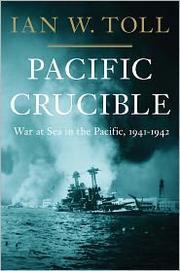
Pacific Crucible

War at Sea in the Pacific, 1941–1942

Cover via Open Library

Rough AI truth score

83/100

Toll's operational sequence from Pearl Harbor through Midway and Guadalcanal aligns closely with official histories. Its carrier-centered naval drama is accurate but should not obscure intelligence, logistics, submarines, land campaigns, industrial replacement, and Allied contributions.

Based on three central claims · high confidence

The three claims

01Supported

American intelligence and carrier aviation enabled the June 1942 victory at Midway and destroyed four Japanese fleet carriers.

Naval History and Heritage Command records confirm intelligence warning, the carrier ambush, force composition, and four Japanese carrier losses. Chance and Japanese planning errors mattered, but the book's core operational account is secure.

02Supported

The Guadalcanal campaign transferred the strategic initiative and imposed severe attrition on Japanese naval and air forces.

Official naval histories describe the six-month campaign as a tipping point, document failed Japanese reinforcement, and trace the shift to sustained Allied offense. The result emerged cumulatively rather than from one battle alone.

03Mixed

Carrier battles alone decided the early Pacific War and made the later Allied victory effectively inevitable by late 1942.

Carrier power and losses at Midway were pivotal, and Guadalcanal changed initiative. Industrial production, logistics, codebreaking, submarines, coalition strategy, land-based aviation, China, and later campaigns remained necessary; contingency did not disappear.

Other claims worth checking
  • Combat rapidly exposed flaws in prewar doctrine.
  • Operational intelligence can offset material disadvantage.

What this number means. It is an AI-generated first-pass judgment of three central factual or causal claims—not a rating, exhaustive fact-check, or human peer review. Claim credits are 100% for supported, 75% for mostly supported, 50% for mixed, and 25% for weak, then averaged and rounded. Lower confidence means the score should move more as better evidence arrives.

Method three-central-claims/0.1.0 · checked 2026-09-01 · 3/3 selected claims assessed · method and source audit