AI ClaimsRapid review

Edward W. Said · 1978

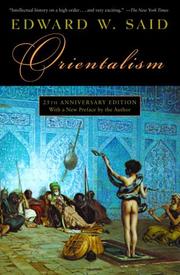
Orientalism

Western Conceptions of the Orient

Cover via Open Library

Rough AI truth score

67/100

Said convincingly showed that representations of the East were entangled with imperial power and made scholarship's categories newly visible. His sweeping continuity, geographic selectivity, and treatment of scholarly agency make the totalizing version of the thesis much less secure.

Based on three central claims · medium confidence

The three claims

01Mostly supported

European and American representations repeatedly constructed an inferior, static, irrational Orient against a superior, dynamic West.

A large archive of travel, literature, art, policy, and scholarship exhibits these recurring binaries, and Said transformed how they are studied. The archive also contains admiration, disagreement, collaboration, and changing regional traditions.

02Mostly supported

Orientalist knowledge and imperial power were mutually reinforcing rather than separable domains of neutral scholarship and external politics.

Colonial institutions funded, classified, translated, and governed through knowledge, while cultural authority helped naturalize rule. The relationship varied by scholar, discipline, empire, and period and was not simple command from government to text.

03Mixed

From antiquity through modern U.S. policy, Orientalism formed a largely continuous Western discourse able to absorb nearly all expert representations of the East.

Long-lived tropes and institutional inheritances are real, but the continuity is too encompassing and can flatten German, Russian, Ottoman, Asian, and indigenous scholarship, historical change, and the agency of represented peoples.

Other claims worth checking
  • Literary form participates in geopolitical representation.
  • No scholar stands entirely outside worldly institutions and interests.

What this number means. It is an AI-generated first-pass judgment of three central factual or causal claims—not a rating, exhaustive fact-check, or human peer review. Claim credits are 100% for supported, 75% for mostly supported, 50% for mixed, and 25% for weak, then averaged and rounded. Lower confidence means the score should move more as better evidence arrives.

Method three-central-claims/0.1.0 · checked 2026-09-01 · 3/3 selected claims assessed · method and source audit