AI ClaimsRapid review

Charles Darwin · 1859

On the Origin of Species

By Means of Natural Selection

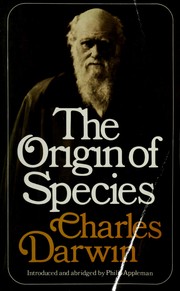
Cover via Open Library

Rough AI truth score

92/100

Darwin's central account of common descent and natural selection is foundational and overwhelmingly supported, although genetics, drift, development, symbiosis, and molecular evolution greatly expand the mechanism he could describe in 1859.

Based on three central claims · high confidence

The three claims

01Supported

Species are connected by common descent with modification rather than independently created as fixed forms.

Fossils, biogeography, comparative anatomy, developmental homology, and genomic phylogenies converge on branching common descent. Darwin lacked genetics and molecular data, but those later evidence streams strengthened the central historical claim.

02Supported

Natural selection acting on heritable variation can produce adaptation and evolutionary change.

Field studies, experiments, population genetics, and genomic signatures repeatedly document differential survival and reproduction changing trait and allele frequencies. Selection is not the only evolutionary process, but its adaptive role is decisive.

03Mostly supported

Evolution ordinarily proceeds through very small gradual changes, making saltation and rapid macroevolutionary episodes negligible.

Much evolutionary change is cumulative, but rates vary and developmental changes, polyploidy, hybridization, punctuated patterns, and ecological disruption can produce comparatively rapid shifts. Modern theory preserves gradual accumulation without requiring one universal tempo.

Other claims worth checking
  • Biogeography records historical descent and dispersal.
  • Artificial selection illustrates how differential reproduction can reshape populations.

What this number means. It is an AI-generated first-pass judgment of three central factual or causal claims—not a rating, exhaustive fact-check, or human peer review. Claim credits are 100% for supported, 75% for mostly supported, 50% for mixed, and 25% for weak, then averaged and rounded. Lower confidence means the score should move more as better evidence arrives.

Method three-central-claims/0.1.0 · checked 2026-09-01 · 3/3 selected claims assessed · method and source audit