AI ClaimsRapid review

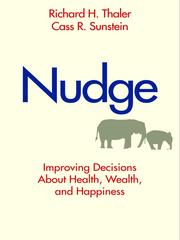
Richard H. Thaler and Cass R. Sunstein · 2008

Nudge

Improving Decisions About Health, Wealth, and Happiness

Cover via Open Library

Rough AI truth score

67/100

Thaler and Sunstein correctly show that choice architecture is unavoidable and that defaults, salience, and simplification can shift behavior. Effects are usually context-dependent and smaller at scale, while calling a policy libertarian paternalism does not settle welfare, distribution, or legitimacy concerns.

Based on three central claims · medium confidence

The three claims

01Mostly supported

Choice architecture is unavoidable because defaults, ordering, salience, and friction shape decisions even when every option remains available.

Laboratory and field studies repeatedly show that presentation and transaction costs affect enrollment, food, finance, and administrative choices. Effects vary sharply by domain and population, and some apparent nudges also convey information or alter real costs.

02Mostly supported

Low-cost nudges can predictably improve health, wealth, and welfare without bans or large financial incentives.

Defaults, reminders, simplification, and social information can produce meaningful behavioral changes, and some scale well. Average effects are heterogeneous, publication bias is consequential, persistence is often unknown, and structural constraints can dominate modest choice-design changes.

03Mixed

Libertarian paternalism reliably preserves autonomy while steering people toward choices that make them better off by their own lights.

Easy opt-outs and transparency can preserve substantial choice, and welfare-oriented defaults may help people with stable goals. Policymakers must infer preferences, architects have interests, burdens can be unequal, and manipulation or sticky defaults can make formal choice less meaningful than the label implies.

Other claims worth checking
  • Automatic enrollment can increase retirement saving.
  • Feedback and error tolerance improve choice environments.

What this number means. It is an AI-generated first-pass judgment of three central factual or causal claims—not a rating, exhaustive fact-check, or human peer review. Claim credits are 100% for supported, 75% for mostly supported, 50% for mixed, and 25% for weak, then averaged and rounded. Lower confidence means the score should move more as better evidence arrives.

Method three-central-claims/0.1.0 · checked 2026-09-01 · 3/3 selected claims assessed · method and source audit