AI ClaimsRapid review

Stephen E. Ambrose · 2000

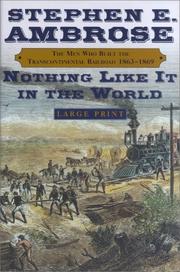
Nothing Like It in the World

The Men Who Built the Transcontinental Railroad, 1863–1869

Cover via Open Library

Rough AI truth score

67/100

Ambrose captures the scale, danger, state support, and astonishing speed of the first transcontinental railroad, but the book's reliability is weakened by documented factual errors and its narrow heroic frame. Chinese labor is essential to the real story and less fully centered than the evidence demands.

Based on three central claims · medium-low confidence

The three claims

01Mostly supported

Federal legislation, land grants, loans, and the rival Central Pacific and Union Pacific companies enabled completion of the first transcontinental railroad in 1869.

The Pacific Railway Acts and federal histories confirm the public-private financing structure, two-company construction, and Promontory completion. Ambrose's dramatic race narrative can obscure later amendments, financial manipulation, and the wider railroad and government system.

02Supported

Chinese workers supplied indispensable labor and expertise on the Central Pacific while enduring lower pay, dangerous conditions, exclusion, and historical erasure.

National Park Service research documents roughly 11,000 Chinese workers by 1868, discriminatory pay, hazardous Sierra work, organized resistance, and their role in laying the final rail. The precise death toll remains unknown and should not be presented as a settled number.

03Weak

The book's detailed quotations, dates, geography, and characterizations provide a consistently reliable factual reconstruction of the construction story.

The broad chronology and many major episodes are corroborated, but specialist reviews identified numerous factual errors, misstatements, and unsupported quotations. Readers can use the narrative as an entry point only if its particulars are checked against archival and specialist sources.

Other claims worth checking
  • The project joined engineering achievement to corporate self-dealing.
  • The celebratory completion image excluded many workers who made it possible.

What this number means. It is an AI-generated first-pass judgment of three central factual or causal claims—not a rating, exhaustive fact-check, or human peer review. Claim credits are 100% for supported, 75% for mostly supported, 50% for mixed, and 25% for weak, then averaged and rounded. Lower confidence means the score should move more as better evidence arrives.

Method three-central-claims/0.1.0 · checked 2026-09-01 · 3/3 selected claims assessed · method and source audit