AI ClaimsRapid review

Seymour Papert · 1980

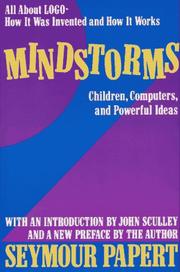
Mindstorms

Children, Computers, and Powerful Ideas

Cover via Open Library

Rough AI truth score

67/100

Papert correctly saw computers as materials for thinking and construction, not merely delivery machines, and programming can make abstract processes inspectable. The broad promise that Logo-style microworlds reliably transform learning or transfer across domains is mixed and strongly dependent on guidance, access, task design, and teacher support.

Based on three central claims · medium confidence

The three claims

01Mostly supported

Children can use programming and computational objects as materials for exploring mathematics, debugging ideas, and making thinking visible.

Computational-thinking research supports gains in programming knowledge and some related problem solving, while constructionist environments make procedures inspectable and revisable. Results vary substantially by age, duration, curriculum, teacher support, and what comparison instruction provides.

02Mostly supported

Learners often develop powerful knowledge by designing public, personally meaningful artifacts and iteratively debugging them.

Project-based and constructionist learning can support engagement, agency, explanation, and disciplinary practice when projects are well scaffolded. Public artifacts do not guarantee conceptual understanding, and open projects can reproduce gaps in prior experience, time, equipment, and teacher attention.

03Mixed

Giving children Logo and suitable microworlds broadly transfers mathematical habits of mind and overturns conventional school learning.

Logo studies report engagement and targeted gains, but far transfer is inconsistent and depends on explicit prompting, duration, curriculum integration, and teacher expertise. Access to a programmable object alone does not dissolve institutional constraints or reliably produce general reasoning skills.

Other claims worth checking
  • Debugging can normalize error as a productive part of learning.
  • Schools often domesticate computers into old instructional patterns.

What this number means. It is an AI-generated first-pass judgment of three central factual or causal claims—not a rating, exhaustive fact-check, or human peer review. Claim credits are 100% for supported, 75% for mostly supported, 50% for mixed, and 25% for weak, then averaged and rounded. Lower confidence means the score should move more as better evidence arrives.

Method three-central-claims/0.1.0 · checked 2026-09-01 · 3/3 selected claims assessed · method and source audit