AI ClaimsRapid review

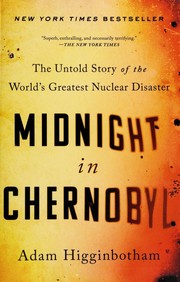
Adam Higginbotham · 2019

Midnight in Chernobyl

The Untold Story of the World's Greatest Nuclear Disaster

Cover via Open Library

Rough AI truth score

100/100

Its central account matches the post-Soviet technical record: an unsafe test met unstable reactor design, operators lacked crucial information, and institutional secrecy deepened both the accident and its aftermath.

Based on three central claims · high confidence

The three claims

01Supported

Chernobyl Unit 4 exploded during a turbine rundown test conducted in an unstable low-power configuration with safety rules and systems compromised.

INSAG's revised account documents the test, low operating reactivity margin, control actions, and disabled or ineffective protections. Operator decisions mattered, but they occurred within procedures and information that failed to disclose the full hazard.

02Supported

RBMK design defects—especially a positive void coefficient and control-rod effects—made the reactor capable of a catastrophic power surge.

The reactor became more reactive as coolant boiled under key conditions, and initial insertion of graphite-displacer control rods could add reactivity locally. These defects were central to the surge and were modified across the remaining fleet.

03Supported

Soviet secrecy concealed known reactor hazards, delayed public warning, and initially shifted excessive blame onto plant operators.

Design organizations withheld safety-relevant characteristics from operators and international reporting, while officials delayed evacuation and public disclosure. INSAG-7 explicitly revised the earlier operator-centered explanation toward design and safety-culture failures.

Other claims worth checking
  • The improvised liquidator response contained the accident at enormous and unevenly measured human cost.
  • Precise long-term excess-cancer totals remain model-dependent and politically contested.

What this number means. It is an AI-generated first-pass judgment of three central factual or causal claims—not a rating, exhaustive fact-check, or human peer review. Claim credits are 100% for supported, 75% for mostly supported, 50% for mixed, and 25% for weak, then averaged and rounded. Lower confidence means the score should move more as better evidence arrives.

Method three-central-claims/0.1.0 · checked 2026-09-01 · 3/3 selected claims assessed · method and source audit