AI ClaimsRapid review

Simon Winchester · 2003

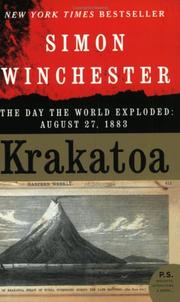
Krakatoa

The Day the World Exploded: August 27, 1883

Cover via Open Library

Rough AI truth score

92/100

The book's volcanic, tsunami, and global-atmosphere story is well supported. Precise causal mechanisms and temperature estimates have been refined, but its central account remains strong.

Based on three central claims · high confidence

The three claims

01Supported

Krakatau's 1883 eruption and caldera collapse generated tsunamis that caused more than 36,000 deaths around the Sunda Strait.

Smithsonian and USGS histories identify caldera destruction, far-reaching pyroclastic flows, and tsunami as the dominant causes of death. Contemporary counts are necessarily approximate, but the scale and primary hazard are securely documented.

02Supported

The eruption produced atmospheric and oceanic signals observed around the world, including pressure waves, distant tsunami records, and vivid sunsets.

Barographs repeatedly recorded the pressure wave, tide gauges detected waves thousands of kilometers away, and widespread optical observations tracked the stratospheric veil. These records helped make Krakatau an early globally instrumented disaster.

03Mostly supported

Stratospheric aerosols from Krakatau caused modest global cooling for several years after the eruption.

Observations and reconstructions show a major aerosol perturbation and cooling of a few tenths of a degree, with timing and regional magnitude varying against natural climate noise. Older dramatic temperature claims are less defensible than this bounded version.

Other claims worth checking
  • Telegraph networks helped turn the eruption into a rapidly shared global news event.
  • The disaster influenced scientific understanding of volcanic tsunamis and atmospheric aerosols.

What this number means. It is an AI-generated first-pass judgment of three central factual or causal claims—not a rating, exhaustive fact-check, or human peer review. Claim credits are 100% for supported, 75% for mostly supported, 50% for mixed, and 25% for weak, then averaged and rounded. Lower confidence means the score should move more as better evidence arrives.

Method three-central-claims/0.1.0 · checked 2026-09-01 · 3/3 selected claims assessed · method and source audit