AI ClaimsRapid review

Michael Pollan · 2008

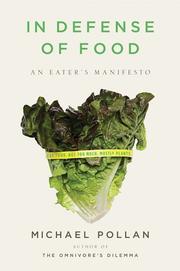
In Defense of Food

An Eater's Manifesto

Cover via Open Library

Rough AI truth score

67/100

The advice to emphasize minimally processed plant foods fits mainstream dietary evidence, and the critique of nutrient-by-nutrient certainty is useful. The contrast between real food and nutritionism is rhetorically sharper than the science, which still depends on nutrients, fortification, and context.

Based on three central claims · medium confidence

The three claims

01Mostly supported

Dietary patterns centered on vegetables, fruits, legumes, whole grains, and other minimally processed foods reduce chronic-disease risk.

WHO and IARC guidance converges on diverse, nutrient-dense diets rich in plant foods and fiber. Much long-term evidence is observational and the benefits arise from patterns and substitutions, so no single traditional cuisine or food rule is uniquely validated.

02Mostly supported

Ultra-processed dietary patterns can promote excess calorie intake and weight gain beyond their headline nutrient totals.

A controlled NIH crossover trial found higher spontaneous intake and short-term weight gain on an ultra-processed diet matched on presented macronutrients, sugar, sodium, and fiber. It was small and brief, so it supports a mechanism without proving every processed food is harmful.

03Mixed

Modern nutrition science usually makes people less healthy by replacing culturally evolved food wisdom with misleading nutrient advice.

Reductionist claims and changing guidance can mislead, while food environments and marketing complicate individual choices. Nutrition science has also established lifesaving deficiency prevention, dietary-risk evidence, labeling, and effective guidance, so the field is not generally anti-health.

Other claims worth checking
  • Traditional cuisines encode practical knowledge about eating.
  • How and with whom people eat can matter alongside nutrient composition.

What this number means. It is an AI-generated first-pass judgment of three central factual or causal claims—not a rating, exhaustive fact-check, or human peer review. Claim credits are 100% for supported, 75% for mostly supported, 50% for mixed, and 25% for weak, then averaged and rounded. Lower confidence means the score should move more as better evidence arrives.

Method three-central-claims/0.1.0 · checked 2026-09-01 · 3/3 selected claims assessed · method and source audit