AI ClaimsRapid review

Benedict Anderson · 1983

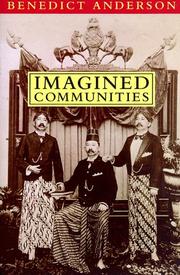
Imagined Communities

Reflections on the Origin and Spread of Nationalism

Cover via Open Library

Rough AI truth score

75/100

Its account of nations as socially imagined communities and print as a powerful coordinating technology remains foundational. The more linear origin story and the weight placed on print-capitalism understate older identities, political agency, empire, gender, and coercion.

Based on three central claims · medium-high confidence

The three claims

01Supported

Nations are socially produced communities whose members imagine a shared horizontal fellowship despite never meeting most fellow members.

National belonging plainly depends on shared stories, symbols, institutions, media, and synchronized practices rather than face-to-face acquaintance. Later scholarship has extended rather than displaced this core insight.

02Mostly supported

Print-capitalism standardized vernacular languages and shared time, materially enabling modern national consciousness.

Newspapers, novels, literacy, and standardized print did coordinate dispersed readers and remain central to nationalism research. Print operated alongside schools, armies, administration, religion, migration, and coercive state power.

03Mixed

Modern nationalism originated chiefly in late-eighteenth-century Creole American communities and then spread modularly across the world.

The American cases matter and Anderson usefully moved nationalism beyond a Europe-only story. Comparative work finds deeper premodern affiliations, divergent imperial paths, non-linear diffusion, and local political agency that resist a single modular sequence.

Other claims worth checking
  • Official nationalism adapted national forms to dynastic empires.
  • Museums, maps, and censuses helped states imagine and classify populations.

What this number means. It is an AI-generated first-pass judgment of three central factual or causal claims—not a rating, exhaustive fact-check, or human peer review. Claim credits are 100% for supported, 75% for mostly supported, 50% for mixed, and 25% for weak, then averaged and rounded. Lower confidence means the score should move more as better evidence arrives.

Method three-central-claims/0.1.0 · checked 2026-09-01 · 3/3 selected claims assessed · method and source audit