AI ClaimsRapid review

Steven Levitsky and Daniel Ziblatt · 2018

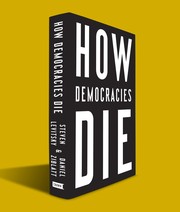
How Democracies Die

Cover via Open Library

Rough AI truth score

75/100

The book's central pattern is strongly supported: many contemporary democracies erode through elected executives who gradually weaken referees, rivals, media, and constraints. Party gatekeeping and informal norms matter, but their effects are conditional. Polarization, constitutional design, inequality, state capacity, media systems, conflict, and international leverage also shape survival and breakdown.

Based on three central claims · high confidence

The three claims

01Supported

Contemporary democracies often erode through incremental actions by elected leaders rather than sudden military coups or immediate cancellation of elections.

Comparative democracy datasets document elected-led autocratization through attacks on oversight, opposition, media, civil liberties, and electoral fairness while formal institutions initially remain. Measurement thresholds differ, and coups persist, but the incremental pathway is now common and well established.

02Mostly supported

Party gatekeeping, mutual toleration, and institutional forbearance can help keep authoritarian actors from gaining and consolidating democratic power.

Parties control nominations, coalitions, resources, and legitimacy, while restraint can prevent escalating institutional retaliation. Gatekeepers can misjudge, lose voter support, or exclude challengers undemocratically, and norms work only alongside enforceable institutions, organized opposition, information, and public commitment.

03Mixed

Severe polarization and abandonment of democratic norms are sufficient general explanations for recent democratic breakdowns.

Polarization can make voters tolerate abuses and turn institutions into partisan weapons, while norm erosion removes informal safeguards. Breakdown also depends on constitutions, parties, state capacity, inequality, conflict, media, civil society, international leverage, leader strategy, and the timing of opposition coordination.

Other claims worth checking
  • Democratic alliances may require cooperation among ideological opponents.
  • Constitutional text alone cannot preserve democracy when political actors abandon restraint.

What this number means. It is an AI-generated first-pass judgment of three central factual or causal claims—not a rating, exhaustive fact-check, or human peer review. Claim credits are 100% for supported, 75% for mostly supported, 50% for mixed, and 25% for weak, then averaged and rounded. Lower confidence means the score should move more as better evidence arrives.

Method three-central-claims/0.1.0 · checked 2026-09-01 · 3/3 selected claims assessed · method and source audit