AI ClaimsRapid review

Margot Lee Shetterly · 2016

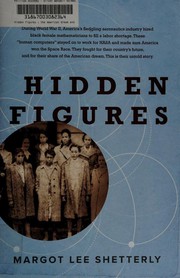
Hidden Figures

The American Dream and the Untold Story of the Black Women Mathematicians Who Helped Win the Space Race

Cover via Open Library

Rough AI truth score

100/100

NASA's own records strongly corroborate the book's core story: Black women performed essential technical work, did so within formal segregation and gender barriers, and contributed directly to landmark flight programs.

Based on three central claims · high confidence

The three claims

01Supported

Black women mathematicians performed essential aeronautics and spaceflight calculations for NACA and NASA.

Langley recruited African American women as human computers during World War II, and their work converted experimental data into engineering results across decades. NASA records identify long careers and specific contributions by Dorothy Vaughan, Katherine Johnson, Mary Jackson, and colleagues.

02Supported

These women worked through formal racial segregation and persistent gender barriers that restricted recognition and advancement.

NASA histories document a separate West Area Computing unit, segregated dining and bathrooms, and barriers to professional roles, alongside gendered pools of computing labor. Individual careers varied, but the institutional constraints described by the book are directly recorded.

03Supported

Katherine Johnson's trajectory and control calculations materially supported Projects Mercury and Apollo.

NASA credits Johnson with spacecraft trajectory and control calculations, orbital work for John Glenn's Mercury flight, and contributions to Apollo. The missions were large team efforts, but the book's claim of meaningful—not solitary—technical contribution is well supported.

Other claims worth checking
  • Dorothy Vaughan became NACA's first Black supervisor and adapted to electronic computing.
  • Mary Jackson crossed institutional barriers to become an engineer.

What this number means. It is an AI-generated first-pass judgment of three central factual or causal claims—not a rating, exhaustive fact-check, or human peer review. Claim credits are 100% for supported, 75% for mostly supported, 50% for mixed, and 25% for weak, then averaged and rounded. Lower confidence means the score should move more as better evidence arrives.

Method three-central-claims/0.1.0 · checked 2026-09-01 · 3/3 selected claims assessed · method and source audit