AI ClaimsRapid review

Jack Weatherford · 2004

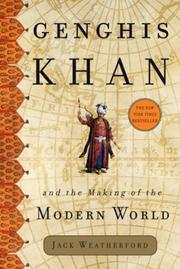
Genghis Khan and the Making of the Modern World

The Mongol Empire Reconsidered

Cover via Open Library

Rough AI truth score

75/100

The corrective emphasis on Mongol trade, mobility, and religious pluralism is valuable. The book often turns those real features into an overly clean progressive legacy and understates conquest, extraction, fragmentation, and earlier Eurasian exchange.

Based on three central claims · medium confidence

The three claims

01Supported

Genghis Khan unified rival steppe groups and founded the largest contiguous land empire in history through highly effective military organization.

The unification and extraordinary territorial expansion are secure, as are Mongol strengths in mobility, command, intelligence, and adaptation. Later khans completed much of the empire, so the full achievement was dynastic rather than Genghis's alone.

02Mostly supported

Mongol rulers practiced unusual religious toleration and promoted long-distance trade and cultural transmission across Eurasia.

Scholarship documents protected religious estates, multi-faith courts, merchant patronage, and safer transcontinental movement during parts of Mongol rule. Tolerance was politically structured and varied across khanates and periods rather than being modern equality.

03Mixed

The Mongols created the foundations of modern political, commercial, and military institutions while Europe largely borrowed their innovations.

Mongol rule accelerated exchange of technologies, personnel, and administrative practices, but many institutions predated the empire or developed independently. Calling this the foundation of modernity confuses transmission and influence with singular origin.

Other claims worth checking
  • Mongol promotion based more on loyalty and ability than aristocratic birth.
  • Later European memory caricatured Mongol rule as uniquely barbaric.

What this number means. It is an AI-generated first-pass judgment of three central factual or causal claims—not a rating, exhaustive fact-check, or human peer review. Claim credits are 100% for supported, 75% for mostly supported, 50% for mixed, and 25% for weak, then averaged and rounded. Lower confidence means the score should move more as better evidence arrives.

Method three-central-claims/0.1.0 · checked 2026-09-01 · 3/3 selected claims assessed · method and source audit