AI ClaimsRapid review

Nassim Nicholas Taleb · 2001

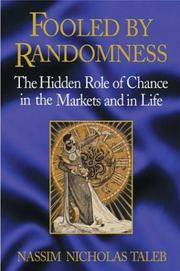
Fooled by Randomness

The Hidden Role of Chance in Life and in the Markets

Cover via Open Library

Rough AI truth score

75/100

The book correctly emphasizes that noisy outcomes make luck easy to mistake for skill, especially when winners are selected after the fact. Survivorship bias, multiple testing, and outcome bias are real. Its skeptical lesson is strongest as a demand for better comparison groups and longer records; it should not be read as showing that durable skill is absent or unmeasurable.

Based on three central claims · medium-high confidence

The three claims

01Supported

People routinely infer skill from outcomes that contain a large and hidden component of luck.

Experimental and field evidence shows outcome bias, performance attribution errors, and overrewarding of lucky results. The inference problem is especially severe with short histories, volatile outcomes, many competitors, and selective attention to winners.

02Mostly supported

Survivorship bias makes successful traders, firms, and careers look more replicable than they are.

Conditioning on survivors removes failures from the comparison set and inflates apparent returns or strategy quality. The magnitude depends on the dataset and selection process; careful longitudinal records, preregistered rules, and appropriate benchmarks can reduce the distortion.

03Mixed

Longer track records and skepticism about narratives are usually enough to separate genuine skill from chance.

More observations and held-out tests help, but nonstationary environments, changing incentives, hidden leverage, correlated bets, and strategy decay can make even long records misleading. Causal knowledge and risk exposure matter alongside duration.

Other claims worth checking
  • Alternative histories are useful for evaluating decisions under uncertainty.
  • Hidden tail exposure can make steady returns deceptively fragile.

What this number means. It is an AI-generated first-pass judgment of three central factual or causal claims—not a rating, exhaustive fact-check, or human peer review. Claim credits are 100% for supported, 75% for mostly supported, 50% for mixed, and 25% for weak, then averaged and rounded. Lower confidence means the score should move more as better evidence arrives.

Method three-central-claims/0.1.0 · checked 2026-09-01 · 3/3 selected claims assessed · method and source audit