AI ClaimsRapid review

Vaclav Smil · 2017

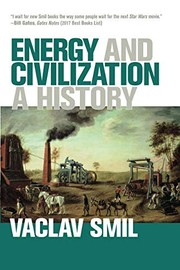
Energy and Civilization

A History

Cover via Open Library

Rough AI truth score

75/100

Smil's quantitative synthesis makes a compelling case that human history is constrained and enabled by energy capture, conversion, density, and power. Fossil fuels underwrote modern material abundance, but energy is not a self-sufficient theory of history; institutions, inequality, empire, and culture shape every transition.

Based on three central claims · medium-high confidence

The three claims

01Supported

The scale and form of usable energy flows constrain food production, transport, settlement, warfare, industry, and the material complexity societies can sustain.

Smil's measurements and modern energy-system assessments support the physical link between available power, conversion technologies, and material services. Energy establishes possibilities and limits without specifying how societies distribute resources or choose institutions.

02Mostly supported

Coal, oil, gas, and electricity enabled unprecedented industrial output, mobility, agricultural productivity, and consumption in modern high-energy societies.

IEA and IPCC assessments confirm the historic dominance of fossil energy and its deep ties to industry, transport, agriculture, electricity, and emissions. Productivity also reflects science, institutions, education, capital, trade, and public health rather than fuel alone.

03Mixed

Energy capture and conversion provide a near-sufficient causal explanation for the rise, organization, and decline of civilizations across history.

Energy accounting reveals constraints that narrative histories often ignore, and it enables disciplined cross-era comparison. Critics rightly note that labor regimes, colonial extraction, political institutions, gender, inequality, culture, and contingency cannot be reduced to joules or watts.

Other claims worth checking
  • Energy transitions usually accumulate layers rather than instantly replacing fuels.
  • Power density and conversion efficiency shape infrastructure choices.

What this number means. It is an AI-generated first-pass judgment of three central factual or causal claims—not a rating, exhaustive fact-check, or human peer review. Claim credits are 100% for supported, 75% for mostly supported, 50% for mixed, and 25% for weak, then averaged and rounded. Lower confidence means the score should move more as better evidence arrives.

Method three-central-claims/0.1.0 · checked 2026-09-01 · 3/3 selected claims assessed · method and source audit