AI ClaimsRapid review

Alfred Lansing · 1959

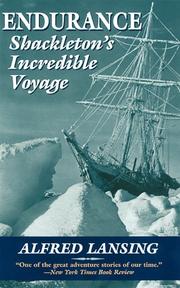
Endurance

Shackleton's Incredible Voyage

Cover via Open Library

Rough AI truth score

92/100

The expedition sequence and rescue are exceptionally well documented in logs, diaries, photographs, and the wreck itself. Lansing's leadership emphasis is fair but should not eclipse Worsley, Wild, the crew, and luck.

Based on three central claims · high confidence

The three claims

01Supported

Endurance became trapped, drifted with pack ice, was crushed, and sank before Shackleton's trans-Antarctic crossing could begin.

Expedition logs, Frank Hurley's photographs, later navigational reconstruction, and the 2022 wreck discovery confirm the sequence and location. The ship was abandoned in October 1915 and sank in the Weddell Sea the following month.

02Supported

Shackleton and five companions crossed roughly 1,300 kilometers of the Southern Ocean in the James Caird to seek rescue for the Elephant Island party.

The open-boat voyage, Worsley's navigation, landfall on South Georgia, and subsequent island crossing are documented in expedition accounts. After several failed rescue attempts, all twenty-two men on Elephant Island were recovered.

03Mostly supported

Shackleton's flexible leadership was the decisive reason every member of the Endurance ship's company survived.

Shackleton repeatedly changed objectives, maintained cohesion, rationed risk, and prioritized rescue, making his leadership genuinely important. Survival also depended on Worsley's navigation, Wild's command, McNeish's work, collective discipline, weather, and fortune.

Other claims worth checking
  • Nearly every expedition diary was available to Lansing.
  • The separate Ross Sea Party suffered deaths while laying depots for a crossing that never occurred.

What this number means. It is an AI-generated first-pass judgment of three central factual or causal claims—not a rating, exhaustive fact-check, or human peer review. Claim credits are 100% for supported, 75% for mostly supported, 50% for mixed, and 25% for weak, then averaged and rounded. Lower confidence means the score should move more as better evidence arrives.

Method three-central-claims/0.1.0 · checked 2026-09-01 · 3/3 selected claims assessed · method and source audit