AI ClaimsRapid review

Roger Crowley · 2008

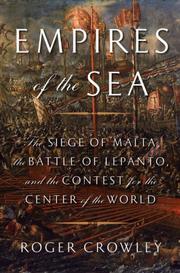
Empires of the Sea

The Siege of Malta, the Battle of Lepanto, and the Contest for the Center of the World

Cover via Open Library

Rough AI truth score

75/100

Crowley's campaign narrative gets the core sequence and strategic stakes of Malta, Cyprus, and Lepanto right. Framing 1521–1580 as a single civilizational showdown is vivid but compresses shifting coalitions, commerce, internal divisions, and the Ottoman recovery after Lepanto.

Based on three central claims · medium confidence

The three claims

01Supported

The failed Ottoman siege of Malta in 1565 and the Holy League victory at Lepanto in 1571 were major Mediterranean military events.

Official Maltese and Spanish archival and museum sources confirm the siege, Cyprus crisis, coalition, battle date, participants, and enormous losses. Both events had substantial strategic and symbolic consequences regardless of later rhetorical inflation.

03Mixed

The sixteenth-century Mediterranean conflict was fundamentally a unified Christian-versus-Muslim struggle for the center of the world.

Religious identity and crusading language mattered greatly, and the combatants often mobilized them. France avoided the league, Christian and Muslim states traded and negotiated, and coalitions shifted, so a binary civilizational frame obscures state interests and internal diversity.

Other claims worth checking
  • Galley warfare depended on logistics and coerced labor.
  • Narratives of holy war coexisted with pragmatic diplomacy.

What this number means. It is an AI-generated first-pass judgment of three central factual or causal claims—not a rating, exhaustive fact-check, or human peer review. Claim credits are 100% for supported, 75% for mostly supported, 50% for mixed, and 25% for weak, then averaged and rounded. Lower confidence means the score should move more as better evidence arrives.

Method three-central-claims/0.1.0 · checked 2026-09-01 · 3/3 selected claims assessed · method and source audit