AI ClaimsRapid review

Carl Sagan · 1980

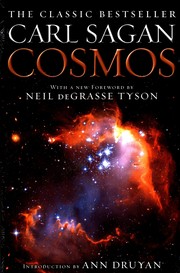
Cosmos

A Personal Voyage Through the Universe

Cover via Open Library

Rough AI truth score

92/100

Its central picture of cosmic evolution, stellar element formation, and science as a self-correcting method remains remarkably sound. Some numerical estimates and planetary details naturally predate four decades of discovery.

Based on three central claims · high confidence

The three claims

01Supported

The universe evolved over billions of years from a hot dense state into galaxies, stars, planets, chemistry, and life capable of studying its origins.

Modern cosmology strongly confirms an expanding 13.8-billion-year-old universe, early nucleosynthesis, later star and galaxy formation, and planetary systems. The emergence of life remains known from one example, but the physical sequence is secure.

02Supported

The carbon, oxygen, and many heavier elements in living bodies were forged in stars and dispersed into later planetary systems.

Stellar nucleosynthesis and supernova enrichment explain the origins of most elements heavier than primordial hydrogen, helium, and lithium. Sagan's 'star stuff' phrase is poetic, but its physical meaning is firmly established.

03Mostly supported

Scientific knowledge advances by skeptical testing and correction, while myth and authority repeatedly obstruct accurate understanding of nature.

Replication, observation, and revisability are core scientific norms, and Sagan's historical examples capture real conflicts. The contrast can be too binary because religion, state authority, patronage, craft, and science have also interacted productively.

Other claims worth checking
  • Venus's heat is driven by a massive greenhouse effect.
  • Nuclear war could destroy civilization even if some humans survived.

What this number means. It is an AI-generated first-pass judgment of three central factual or causal claims—not a rating, exhaustive fact-check, or human peer review. Claim credits are 100% for supported, 75% for mostly supported, 50% for mixed, and 25% for weak, then averaged and rounded. Lower confidence means the score should move more as better evidence arrives.

Method three-central-claims/0.1.0 · checked 2026-09-01 · 3/3 selected claims assessed · method and source audit