AI ClaimsRapid review

Robert Venturi · 1966

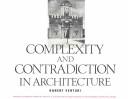
Complexity and Contradiction in Architecture

Cover via Open Library

Rough AI truth score

67/100

Venturi's manifesto convincingly reopened architecture to ambiguity, historical reference, layered meaning, and difficult wholes after reductive versions of modernist purity. Its historical examples demonstrate an interpretive possibility, not an empirical law that complexity produces better buildings.

Based on three central claims · medium-low confidence

The three claims

01Mostly supported

Important architecture often contains ambiguity, tension, exception, and multiple orders rather than resolving every element into simple unity.

Venturi's extensive readings of mannerist, baroque, rococo, modern, and vernacular works document recurring compositional complexity. The categorization is interpretive and selectively sampled, but it decisively rebuts the claim that value requires formal simplicity.

02Mostly supported

Historical architecture can supply active design lessons without requiring literal stylistic imitation.

The book's examples and later reception show that historical forms can be analyzed for hierarchy, inflection, accommodation, and layered meaning rather than copied as decoration. Which lesson applies remains a design judgment shaped by context and power.

03Mixed

Complex and contradictory form more truthfully represents contemporary life and therefore tends to produce better architecture than simple form.

Complexity can accommodate program, context, memory, and competing meanings, but visual or geometric complication can also increase cost, energy use, maintenance, and confusion. Contemporary life does not dictate one formal language, and simplicity can be deeply adaptive.

Other claims worth checking
  • A difficult whole can retain conflicting parts without chaos.
  • Purist architectural language often suppresses real program and convention.

What this number means. It is an AI-generated first-pass judgment of three central factual or causal claims—not a rating, exhaustive fact-check, or human peer review. Claim credits are 100% for supported, 75% for mostly supported, 50% for mixed, and 25% for weak, then averaged and rounded. Lower confidence means the score should move more as better evidence arrives.

Method three-central-claims/0.1.0 · checked 2026-09-01 · 3/3 selected claims assessed · method and source audit