AI ClaimsRapid review

Eric Schlosser · 2013

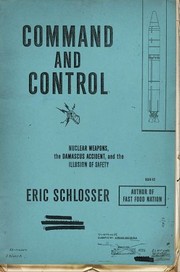
Command and Control

Nuclear Weapons, the Damascus Accident, and the Illusion of Safety

Cover via Open Library

Rough AI truth score

92/100

The Damascus accident and the broader record of nuclear mishaps support Schlosser's argument about fallible systems. Safety features repeatedly worked, so the evidence supports persistent risk rather than inevitable catastrophe.

Based on three central claims · high confidence

The three claims

01Supported

A dropped socket punctured a Titan II missile near Damascus, Arkansas, in 1980, leading to an explosion that killed one airman and injured others.

The Air Force's own history records the socket fall, fuel leak, evacuation, later silo explosion, one death, and twenty-one injuries. The warhead was thrown from the silo, but its safety features prevented nuclear yield or radioactive release.

02Supported

United States nuclear forces experienced repeated serious accidents and incidents during the Cold War without an accidental nuclear detonation.

Declassified and congressional records describe weapons damaged in crashes, fires, explosions, losses, and handling failures. High explosives sometimes detonated and radioactive material dispersed, but safeguards prevented an unintended U.S. nuclear yield.

03Mostly supported

Complex organizations cannot make nuclear weapons perfectly safe because readiness, human error, component failure, and command control create competing risks.

The historical record supports recurring technical and organizational failure modes, while later safeguards, oversight, and weapon designs materially reduced some risks. 'Perfectly safe' is untestable, but the tension between rapid readiness and accident prevention is real.

Other claims worth checking
  • Weapon designers and military operators often prioritized different dimensions of safety and reliability.
  • Secrecy delayed public and institutional learning from some accidents.

What this number means. It is an AI-generated first-pass judgment of three central factual or causal claims—not a rating, exhaustive fact-check, or human peer review. Claim credits are 100% for supported, 75% for mostly supported, 50% for mixed, and 25% for weak, then averaged and rounded. Lower confidence means the score should move more as better evidence arrives.

Method three-central-claims/0.1.0 · checked 2026-09-01 · 3/3 selected claims assessed · method and source audit