AI ClaimsRapid review

Peter Hall · 1998

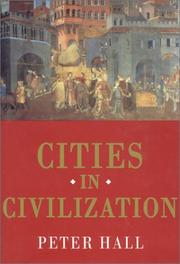
Cities in Civilization

Culture, Innovation, and Urban Order

Cover via Open Library

Rough AI truth score

67/100

Hall's comparative portraits convincingly show that concentrated urban networks can produce exceptional cultural and technical creativity. His chosen golden ages are illuminating rather than representative, and the book never proves a general formula for when creative cities emerge.

Based on three central claims · medium confidence

The three claims

01Mostly supported

Particular cities have generated disproportionate bursts of artistic, scientific, technological, and administrative innovation.

Historical records support the exceptional clustering described in Athens, Florence, Vienna, Paris, Manchester, Silicon Valley, and other cases. Attribution is difficult because cities also concentrate population, capital, archives, and surviving recognition.

02Mostly supported

Creative urban golden ages often combine wealth, social tension, outsider networks, patronage, and institutional openness.

Hall's cases reveal recurring combinations of resources, migration, competition, and permissive institutions, and modern agglomeration research supports knowledge spillovers. The ingredients vary and are easier to identify retrospectively than to predict prospectively.

03Mixed

The selected historical cases reveal a transferable causal recipe that cities can use to deliberately create future golden ages.

The comparative narratives generate plausible mechanisms and useful questions, but selection on famous successes, flexible periodization, and limited counterfactual comparison prevent a validated recipe. Policies that imitate surface features may miss deeper institutions and chance.

Other claims worth checking
  • Urban creativity frequently arrives amid crisis rather than comfort.
  • Different kinds of innovation depend on different local institutions.

What this number means. It is an AI-generated first-pass judgment of three central factual or causal claims—not a rating, exhaustive fact-check, or human peer review. Claim credits are 100% for supported, 75% for mostly supported, 50% for mixed, and 25% for weak, then averaged and rounded. Lower confidence means the score should move more as better evidence arrives.

Method three-central-claims/0.1.0 · checked 2026-09-01 · 3/3 selected claims assessed · method and source audit