AI ClaimsRapid review

James Gleick · 1987

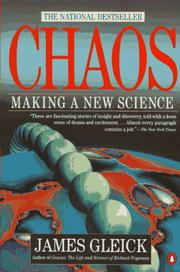
Chaos

Making a New Science

Cover via Open Library

Rough AI truth score

92/100

The central science and discovery chronology are reliable: deterministic systems can be unpredictable, period-doubling shows universality, and fractal geometry supplies tools for irregular form. The unified 'new science' framing smooths older roots and disciplinary differences.

Based on three central claims · high confidence

The three claims

01Supported

Edward Lorenz showed that simple deterministic equations can generate bounded, nonperiodic behavior with extreme sensitivity to initial conditions.

Lorenz's 1963 paper explicitly demonstrated deterministic nonperiodic flow and the attractor later bearing his name. Sensitivity limits long-range prediction even when equations are known, without making short-range forecasting or determinism meaningless.

02Supported

Feigenbaum discovered universal scaling ratios in the period-doubling route to chaos across broad classes of nonlinear maps.

The constants and renormalization description are established mathematical results for specified universality classes, and later computer-assisted work supplied rigorous support. Universality is powerful but does not mean every chaotic system follows period doubling.

03Mostly supported

Mandelbrot's fractal geometry provided a common language for self-similar irregular structures across mathematics and natural science.

Fractal dimensions and iterative sets became major tools and changed visualization across fields. Many mathematical precursors long predated Mandelbrot, and empirical natural objects show finite ranges and imperfect rather than exact self-similarity.

Other claims worth checking
  • Computer graphics made nonlinear dynamics newly visible to researchers.
  • Chaos research connected previously separate disciplines through shared patterns.

What this number means. It is an AI-generated first-pass judgment of three central factual or causal claims—not a rating, exhaustive fact-check, or human peer review. Claim credits are 100% for supported, 75% for mostly supported, 50% for mixed, and 25% for weak, then averaged and rounded. Lower confidence means the score should move more as better evidence arrives.

Method three-central-claims/0.1.0 · checked 2026-09-01 · 3/3 selected claims assessed · method and source audit