AI ClaimsRapid review

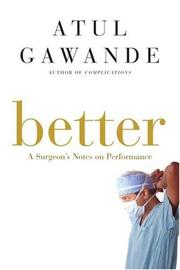
Atul Gawande · 2007

Better

A Surgeon's Notes on Performance

Cover via Open Library

Rough AI truth score

83/100

Gawande's call for diligence, measurement, teamwork, and incremental improvement is well grounded. Hand hygiene, feedback, and process reliability can save lives, but improvement is not produced by exhortation alone; durable gains require workflow redesign, resources, local adaptation, and attention to unintended effects.

Based on three central claims · high confidence

The three claims

01Supported

Reliable execution of simple evidence-based practices such as hand hygiene can prevent substantial avoidable harm.

Infection-prevention evidence and WHO guidance support hand hygiene as a core safety practice, especially in multimodal programs. Compliance measurement and causal estimates are imperfect, but microbial transmission and the direction of benefit are not seriously in doubt.

02Mostly supported

Performance improves when clinicians measure outcomes, compare variation, seek feedback, and redesign routine processes rather than relying on individual excellence alone.

Quality-improvement evidence supports audit, feedback, standard work, teamwork, and iterative redesign, with variable effect sizes. Measurement can be gamed, burden staff, or optimize proxies, so useful improvement requires valid outcomes, learning culture, and context-sensitive implementation.

03Mostly supported

Persistent, incremental improvements in ordinary clinical work often produce more population benefit than rare technical breakthroughs.

Implementation of known prevention and treatment can yield large gains, and reliability affects far more encounters than frontier procedures. Breakthroughs and routine execution are complements: vaccines, drugs, diagnostics, and surgery change what reliable care can accomplish.

Other claims worth checking
  • Professional excellence includes moral responsibility and not only technical skill.
  • Public outcome comparison can motivate improvement when risk adjustment and incentives are sound.

What this number means. It is an AI-generated first-pass judgment of three central factual or causal claims—not a rating, exhaustive fact-check, or human peer review. Claim credits are 100% for supported, 75% for mostly supported, 50% for mixed, and 25% for weak, then averaged and rounded. Lower confidence means the score should move more as better evidence arrives.

Method three-central-claims/0.1.0 · checked 2026-09-01 · 3/3 selected claims assessed · method and source audit