AI ClaimsRapid review

Simon Winchester · 2010

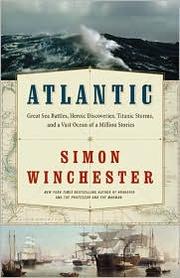
Atlantic

Great Sea Battles, Heroic Discoveries, Titanic Storms, and a Vast Ocean of a Million Stories

Cover via Open Library

Rough AI truth score

75/100

Winchester's ocean biography accurately links Atlantic geology, circulation, migration, conquest, slavery, trade, war, and science. Treating the ocean as one protagonist creates narrative coherence but can flatten sharply unequal and locally distinct histories around its rim.

Based on three central claims · medium confidence

The three claims

01Supported

The Atlantic basin was created by plate separation and remains organized around the Mid-Atlantic Ridge and connected circulation systems.

NOAA describes the ridge as a slow-spreading plate boundary running down the ocean, while oceanographic records show linked currents and basins. Geological unity does not imply ecological or human uniformity, but the physical account is secure.

02Mostly supported

Atlantic shipping connected Europe, Africa, and the Americas through migration, commodity trade, conquest, and forced labor.

Port, customs, archaeological, and voyage records document dense circulation and the centrality of coerced African migration. The network was profoundly unequal and segmented; connection should not be mistaken for shared benefit or a single integrated community.

03Mixed

The Atlantic can be narrated as a single living character whose internal logic explains the histories of all surrounding societies.

An ocean-scale frame reveals recurring currents, routes, exchanges, and ecological constraints. Political power, Indigenous histories, continental interiors, local ecologies, and asymmetrical violence resist a single-character explanation, making the device literary rather than causal.

Other claims worth checking
  • Ocean currents shape routes and climates without determining politics.
  • Atlantic modernity was built through both voluntary and forced movement.

What this number means. It is an AI-generated first-pass judgment of three central factual or causal claims—not a rating, exhaustive fact-check, or human peer review. Claim credits are 100% for supported, 75% for mostly supported, 50% for mixed, and 25% for weak, then averaged and rounded. Lower confidence means the score should move more as better evidence arrives.

Method three-central-claims/0.1.0 · checked 2026-09-01 · 3/3 selected claims assessed · method and source audit