AI ClaimsRapid review

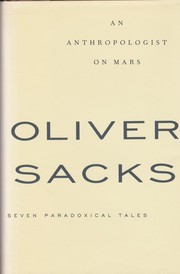
Oliver Sacks · 1995

An Anthropologist on Mars

Seven Paradoxical Tales

Cover via Open Library

Rough AI truth score

75/100

The cases persuasively show neural diversity, compensation, and the importance of environment. They support possibility claims better than frequency or mechanism claims: seven extraordinary lives cannot establish how typical a trajectory is or isolate one causal explanation.

Based on three central claims · medium-high confidence

The three claims

01Supported

People with neurological differences can develop powerful compensatory strategies rather than merely lose function.

Adult learning, cross-modal recruitment, and sensory substitution demonstrate genuine compensatory plasticity. Outcomes depend on timing, residual function, training, social support, and task design, but the possibility and clinical importance of compensation are well established.

02Mostly supported

Neurological ability and disability are partly shaped by the person's environment, tools, work, and relationships.

Functional outcomes vary with environmental fit, rehabilitation, assistive tools, and social context; laboratory deficits do not translate mechanically into everyday incapacity. This supports Sacks's ecological view without implying that context removes underlying impairment.

Other claims worth checking
  • Restored vision does not instantly produce normal visual understanding.
  • Creative practice can organize life around both impairment and strength.

What this number means. It is an AI-generated first-pass judgment of three central factual or causal claims—not a rating, exhaustive fact-check, or human peer review. Claim credits are 100% for supported, 75% for mostly supported, 50% for mixed, and 25% for weak, then averaged and rounded. Lower confidence means the score should move more as better evidence arrives.

Method three-central-claims/0.1.0 · checked 2026-09-01 · 3/3 selected claims assessed · method and source audit