AI ClaimsRapid review

Christopher Alexander, Sara Ishikawa, and Murray Silverstein · 1977

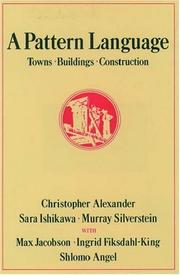
A Pattern Language

Towns, Buildings, Construction

Cover via Open Library

Rough AI truth score

67/100

The pattern-language method is an influential and practical way to preserve recurring design knowledge and support participation. Many individual patterns are plausible or well observed, but the book's claims to scientific validity and universal human fit exceed its testing and documentation.

Based on three central claims · medium-low confidence

The three claims

01Mostly supported

Recurring design problems can be represented as linked patterns that make architectural knowledge easier to discuss and reuse.

Pattern languages have proved durable as a representation method in architecture, software, and interaction design, and their network structure supports shared vocabulary. Reuse does not establish that every pattern produces a better place in every context.

02Mostly supported

Giving residents a shared pattern vocabulary can improve participation and coordination in design.

Pattern-based methods can externalize expert concepts and help groups compare recurring problems and solutions. The evidence base is fragmented, and participation quality also depends on authority, facilitation, representation, budget, and whether community choices can change outcomes.

03Mixed

The 253 published patterns are empirically validated, culturally general solutions capable of generating places with an objective quality without a name.

Many patterns synthesize careful observation and remain useful hypotheses. Scholarly criticism finds idiosyncratic definitions of science, ambiguous evidence, limited testing, normative choices, and cultural specificity, so the complete language cannot be treated as a validated universal system.

Other claims worth checking
  • Large environments can grow coherently through piecemeal acts.
  • Patterns form a connected language rather than an independent checklist.

What this number means. It is an AI-generated first-pass judgment of three central factual or causal claims—not a rating, exhaustive fact-check, or human peer review. Claim credits are 100% for supported, 75% for mostly supported, 50% for mixed, and 25% for weak, then averaged and rounded. Lower confidence means the score should move more as better evidence arrives.

Method three-central-claims/0.1.0 · checked 2026-09-01 · 3/3 selected claims assessed · method and source audit